Who You’re Here to Support and How Your Website Invites Them In
Most people do not land on a website thinking carefully about it. They arrive, glance around, and within a few seconds decide if it feels right or not. Sometimes they stay, sometimes they leave, and it is not always obvious what made that difference.
That is where a quiet question comes in. Who is this actually for, and would someone who needs support feel understood here, or would they feel a little unsure and move on without thinking much about it.
You sit with that for a moment. It feels small at first, but then it starts connecting to everything, the edits you keep making, the times you have thought about how to attract clients and still felt something was not quite right.
You circle back to the layout, assuming it is a web design for therapists issue, shifting things around, trying to make it look more settled.
And then it becomes clearer. It is not just design. It is clarity, and how it quietly shapes marketing for mental health professionals without needing to announce itself.
Let’s read more about this in detail.

Photo by Philip Justin Mamelic
When Your Message Tries to Hold Too Much
There is a tendency to keep things open. It feels responsible somehow, like you are leaving space for anyone who might need support, which makes sense in this kind of work. But something gets lost there, not loudly, more like a soft blur.
When everything is included, nothing stands out enough for someone to recognize themselves, and recognition matters more than information here, a lot more actually. Someone landing on your site is not logically comparing services; they are scanning for a feeling, something that tells them this might be for me, and if that does not happen quickly, they move on, even if you could have helped them.
That is the part people miss when thinking about how to attract clients. It is less about reaching more people and more about being clear enough that the right person pauses rather than scrolls past.
And yes, this sits right inside marketing for mental health professionals, even if it does not look like marketing at all.

Photo by AI25.Studio
Getting Closer to Who You Really Work With
This is not always instantaneous. It can take a little rumination on your practice, observations, maybe even a little doubt about things you thought were coincidental.
You may notice that you see some clients over and over again, not with the same presenting issue, but with the same emotional underpinning.
It might be anxiety that remains hidden under the surface on functional days, or burnout that still looks like success, or something less tangible, just a repeated feeling of isolation that keeps changing its form.
So there is this moment of pause, because now it is not just about categories, it is about experience, and it is life, and it is complex and a bit more difficult to define than you might think.
It shifts the way you write, the way you organise your pages, and the way you approach your online presence, and without being too pushy, it subtly begins to shift how you go about attracting coaching clients or therapy clients.

Photo by Tranmautritam
The Subtle Difference Between a Website and an Invitation
Most websites are built to explain. That is the default.
But explanation is not always what someone needs when they are already unsure about reaching out, and, honestly, too much explanation can create distance rather than clarity.
An invitation feels different. It does not rush. It does not try to cover everything at once. It meets someone where they are, then gently opens a door forward.
Your homepage especially carries this weight. If it feels dense or overly structured, people hesitate. If it feels calm, spacious, and specific, they stay a little longer. Sometimes that is all it takes.

Phot by Oudney Patsika
Writing in a Way That Feels Recognizable
There is a moment, and you have probably seen it in other spaces too, where you read something and think, “that is exactly it,” even if you never said it that way yourself.
That is not about clever writing. It is about accuracy. Emotional accuracy, maybe.
Instead of explaining your process or listing outcomes, your words can reflect what someone is already carrying, and that reflection does more than explanation ever could.
It does not need to be heavy or intense. Just honest. Grounded. Specific enough that it feels real.
And this is where how to attract clients becomes less of a tactic and more of a byproduct of alignment, where the right people feel understood before anything is offered to them.

Photo by cottonbro studio
The Way Design Quietly Affects Everything
It is easy to underestimate this part, because design often gets reduced to preference, what looks good, what feels modern, what others are doing.
But in this space, design is less about appearance and more about how it makes someone feel as they process something personal.
If your pages feel crowded or fast, people rush. If they feel open and steady, people slow down.
That shift changes how your content is received, even if the words themselves stay the same.
And this is where marketing for mental health professionals overlaps with design in a way that is not immediately obvious, because the experience itself becomes part of the message.

Phot by Efrem Efre
Letting the Structure Breathe a Little
Not all sections need to be weighed the same. Some parts of a website are meant to go deeper, some parts are meant to guide. When everybody gets the same treatment, even the strong stuff starts to feel heavy.
Prioritize flow over perfection. People should flow through a page, not feel as though they’re dissecting it piece by piece.
When the next step appears, it should feel expected, not pushed, like a continuation rather than a shift.
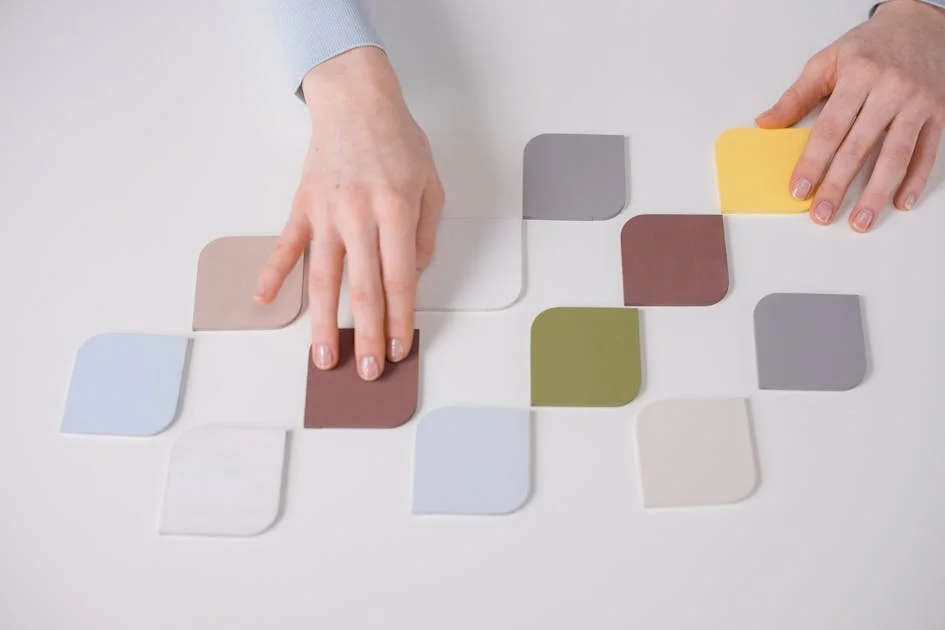
Photo by Ron Lach
Being Specific Without Overthinking It
This is usually where hesitation comes in. The worry that narrowing your focus will limit who reaches out or reduce opportunities.
But clarity does not reduce opportunity; it refines it.
When someone feels that your website is speaking directly to them, they are far more likely to stay, read, and consider, even if they are not a perfect match in every way.
And interestingly, broader audiences still come; they just arrive through a clearer entry point.
That is the quiet strength behind how to attract clients, not expanding your message endlessly, but letting it become clear enough that it actually lands.

Photo by Cytonn Photography
A Gentle Next Step
When your site feels a bit out of place or just not entirely in sync at all, it is sometimes an indication that your practice has outgrown your online presence, and is not yet fully in tune. Most heart-centered wellness practitioners begin with DIY, which in the long run may become restrictive, time-consuming, and difficult to perfect by yourself.
It is at this point that collaboration with a web designer for therapists becomes a reality. You do not have to attempt to put it all together, with a web designer, you are assisted in making sense of your who, what, and why, and converting that into a site that really represents your work.
A well-planned web site is not just another site that sits there but softly draws the right clients and establishes trust and helps you grow effortlessly.
If you’re feeling that shift, it may be time to create a website that not only looks good, but clearly invites the people you’re here to help.
When you're ready to collaborate on a website that reflects the heart of your practice and helps the right clients find you, click here to book a complimentary Discovery Call.