7 Things Your Therapy Website Needs to Make Anxious Clients Feel Safe Before Booking
For many therapists, psychologists, and mental health professionals, their website is often the first introduction a prospective client has to their practice. This means that prospective clients may already be feeling anxious, overwhelmed, or uncertain about reaching out for support, making that first impression incredibly important. Before clicking "Book a Consultation" or filling out a contact form, they may be quietly asking themselves: Will I feel comfortable with this person? Will they understand me? What will happen if I reach out?
Your therapy website can't remove all of the uncertainty that comes with seeking support, but it can help make that first step feel a little easier. Creating a welcoming introduction that immediately puts prospective clients at ease can help them feel reassured and more comfortable before reaching out. But how can you accomplish that?
Having trouble putting your professional story into words? The Wellness Website Content Planner includes prompts designed to help you identify the experiences, values, and motivations that make your professional journey uniquely yours.
Read on to discover seven key elements you can incorporate into your therapist website, alongside your wellness web designer, to help anxious clients feel like they've come to the right place.

Photo by Erik Mclean
A Warm and Reassuring First Impression
A therapist website doesn't need to look clinical to feel professional, nor does it need to look overly "wellness-focused" to feel welcoming. A thoughtful Squarespace web designer can use everything from spacing and typography to imagery and color to create a digital environment that feels calm rather than overwhelming.
Let's discuss some of the key factors that contribute to making the right first impression on your therapist website.
Warm Photography
I can't stress enough the importance of having high-quality photos that embody the warmth and intentionality of your practice when working with your Squarespace web designer. If you know you'd like to invest in a custom Squarespace website, it's beneficial to schedule a professional photoshoot in advance. This gives you a variety of high-quality images in different orientations, including candid and posed photographs, that can be used throughout your website.
This isn't about making your website overly soft or relying on stereotypical "wellness" imagery. Instead, consider working with a photographer who has experience photographing therapists, psychologists, or other wellness professionals. They can better understand how your target audience should feel when visiting your website—comforted, welcomed, and reassured.
Thoughtful Typography
Believe it or not, the fonts you choose help shape the overall look and feel of your wellness website. It's generally recommended to use no more than three fonts to create a cohesive typography system. While it may be tempting to use an elegant script font you love, readability should always come first. Choose fonts that pair well together while remaining easy for visitors to read.
Calming Colors
The colors used throughout your mental health website design should align with your overall brand identity. Soft pastels and earthy tones often work beautifully for therapist websites, psychologist websites, and other wellness websites, with up to five colors woven consistently throughout the design.
Just as the colors in your home or office can influence your mood, the colors on your website can shape how visitors feel. Ask yourself: How can my color palette help prospective clients feel calm, safe, and supported from the moment they arrive?
White Space
You've probably heard the saying, "Less is more." White space fully supports this philosophy by creating room for your content to breathe instead of overwhelming visitors with too much information.
Not every inch of your website needs to be filled with text or images. Instead, your wellness website designer can intentionally leave space throughout your website, giving visitors a chance to pause, reflect, and comfortably absorb the information before taking the next step.
Clear Messaging
Website messaging—also known as copywriting or simply "copy"—is one of the most important elements of a therapist website. Strong messaging guides prospective clients through your website without confusion and helps them feel confident about reaching out.
Ask yourself whether your website immediately answers questions such as:
• Can I trust this person?
• Who do they help?
• Are their services clearly explained?
• Can I easily understand their approach?
• Is pricing available if applicable?
• Are there testimonials or trust-building elements?
• Is it easy to contact them?
Collectively, your messaging should tell a story that answers your visitors' questions while building reassurance, trust, and connection.

Photo by Yan Krukau
Avoid Overwhelming Animations and Pop-ups
Are you promoting a workshop or offering a helpful digital resource? Pop-ups can certainly be effective, but timing matters. Research suggests it's best to wait 10–15 seconds or until a visitor has scrolled at least halfway down the page before displaying a pop-up.
Likewise, while elaborate animations can make a website feel unique, too many can slow down your Squarespace website and become distracting. A clean, thoughtfully designed experience often feels far more calming than one filled with constant movement.
Collectively, remember that a thoughtful Squarespace web designer can use everything from spacing and typography to imagery and color to create a digital environment that feels calm rather than overwhelming. In the next sections, we'll take a deeper dive into how you can provide your wellness website designer with the information they need to create a beautiful, strategic, and fully customized website that helps prospective clients feel confident before they ever reach out.

Photo by Thanh Luu
Clear Messaging That Helps Visitors Feel Understood
One of the most reassuring things you can give an anxious website visitor is clarity. Visitors to your therapist website shouldn't have to spend too much time trying to understand who you help or how you can support them. Instead, your messaging should immediately communicate who you work with, the concerns you commonly help clients navigate, and what someone can expect from your therapeutic approach.
To break that down, here are a few important factors to keep in mind when creating the messaging for your therapist website or mental health professional website:
• Who you help
• What they struggle with
• What you offer
• Your approach
• Whether you offer in-person, virtual, or hybrid sessions
Allow your story to shine through here and speak directly to the people who need your services most. Thoughtful messaging helps prospective clients feel seen, understood, and confident that they've come to the right place.
If you want a fill-in-the-blank framework to work through alongside this post, The Wellness Website Content Planner was designed exactly for this moment — grab it before you start so you can fill it in as you read.

Photo by Ann H
An About Page That Lets Visitors Get to Know You
For someone considering therapy, choosing a practitioner can feel deeply personal. Your About page gives prospective clients an opportunity to get a sense of who you are before they ever sit across from you. This doesn't mean sharing every detail of your personal life. Instead, it means giving visitors enough information to understand your professional approach and decide whether it feels aligned with what they're looking for.
Your About page should include:
• A professional photo
• Credentials
• Experience
• Your personal or professional story
• Your therapeutic philosophy
• Your values
• What makes your approach unique
Please don't skip the professional photo! I often hear from clients that they're shy or don't want their photo displayed on their website. Others may have a photo of themselves, but it isn't professional or doesn't align with their brand or the nature of their work.
No matter the reason, it's important to include at least one professional photo on your therapist website. People naturally connect with people, and seeing the face behind a practice helps establish trust before a prospective client ever reaches out.
If you don't already have a professional headshot, consider scheduling a photoshoot or asking a friend to take high-quality photos that reflect your personality while staying true to your brand. A thoughtful, authentic image can make a significant difference in helping visitors feel more comfortable and connected.
Not sure how to write your own version of this? The Wellness Website Content Planner includes an About page framework with prompts that walk you through writing your hero section one question at a time.

Photo by cottonbro studio
What Happens When Someone Reaches Out?
One of the simplest ways to help a prospective client feel more comfortable is to remove some of the mystery surrounding the booking process. If someone has never worked with a therapist before, phrases like "Schedule a Consultation" may still leave them wondering, What happens after I click the button?
This is the perfect opportunity to clearly explain what happens after someone decides to contact you. Consider breaking the process down into simple steps or even creating an infographic for visual learners. By outlining what happens after someone submits a contact form, how long it typically takes to receive a response, how appointments are scheduled, and what they can expect during their first session, you're helping to reduce uncertainty before they ever reach out.
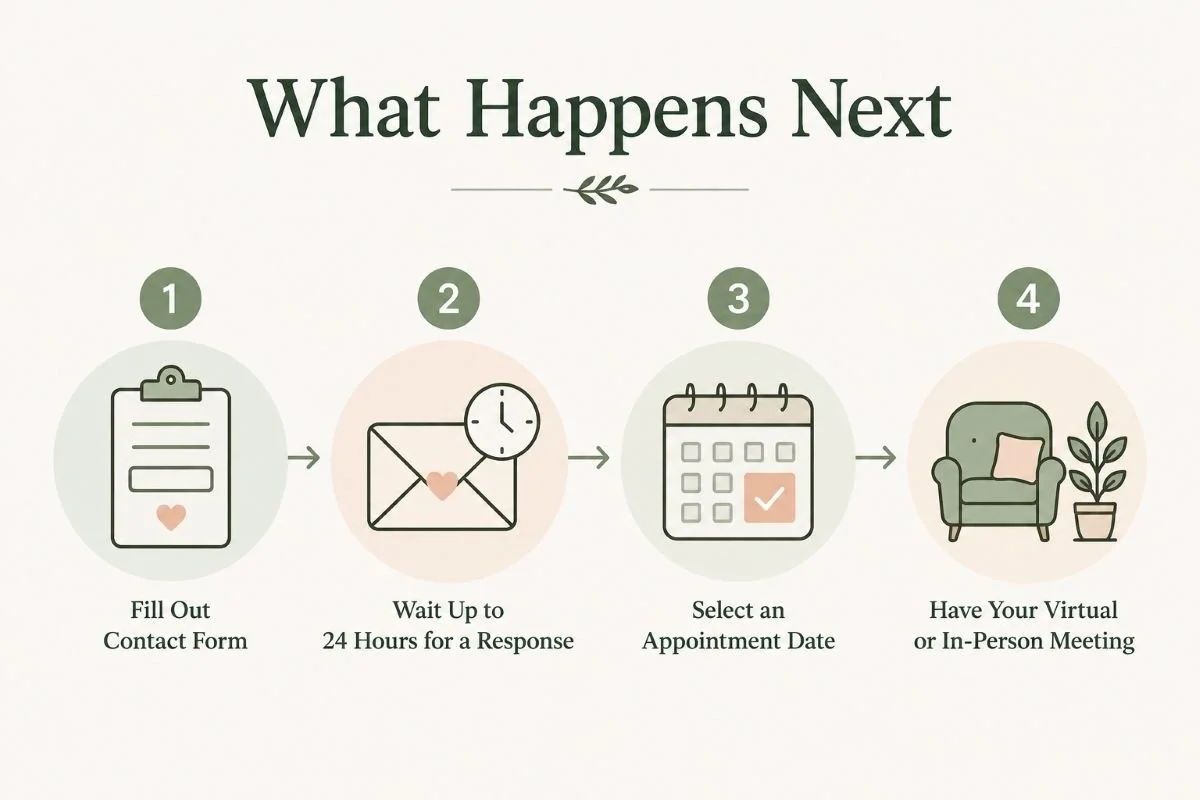
Remember, anxiety often thrives on uncertainty. The more straightforward and transparent you can make the process, the more confident and comfortable prospective clients will feel about taking that first step.

Photo by Ann H
FAQs That Address Common Concerns
An FAQ section can be especially valuable because it answers questions that prospective clients may not feel comfortable asking directly. In many cases, someone may hesitate to reach out simply because they aren't sure what to expect.
Think of your FAQ section as an opportunity to ensure no important questions go unanswered. It's a dedicated space on your therapist website where you can provide clear, helpful information that builds trust before a visitor ever contacts you.
Here are a few questions you may want to include:
• Do you offer virtual sessions?
• What happens during the first session?
• How long are appointments?
• Do you accept insurance?
• What are your rates?
• Do you work with my specific concern?
• What is your cancellation policy?
• How do I know if you're the right therapist for me?
As an added bonus, FAQ sections can also support your website's SEO. By naturally incorporating well-researched keywords into your answers, your therapist website or psychologist website has additional opportunities to appear in relevant Google searches, helping prospective clients discover your practice.

Photo by Lukas Kaufmann
Trust-Building Elements That Feel Authentic
How many times have you read reviews before investing in a product or service? Trust doesn't have to come from a long list of credentials alone. Often, it's built through the small details that reassure visitors they are connecting with an experienced, thoughtful professional.
Here are a few trust-building elements you may consider incorporating into your therapist website or mental health professional website:
• Testimonials (where ethically appropriate)
• Professional credentials
• Professional associations
• Certifications
• Years of experience
• Media appearances
• Educational content
It's important to note that testimonials and client reviews can have ethical and regulatory considerations for therapists, psychologists, and other mental health professionals. Before including them on your website, be sure you're familiar with the professional guidelines that apply to your profession.
Remember, trust isn't built by one element alone. It's created through the thoughtful combination of your messaging, imagery, credentials, educational content, and overall website experience.

Photo by Kindel Media
A Call to Action That Doesn't Feel Pushy
Throughout your website, and especially at the end of each page, your wellness web designer will strategically place calls to action (CTAs) that encourage prospective clients to take the next step. However, when someone is already feeling nervous about reaching out for support, your call to action shouldn't add more pressure.
A gentle invitation such as "Let's See if We're a Good Fit" can feel very different from a button that simply says "Book Now." Instead of creating urgency, your CTA should feel welcoming, reassuring, and approachable.
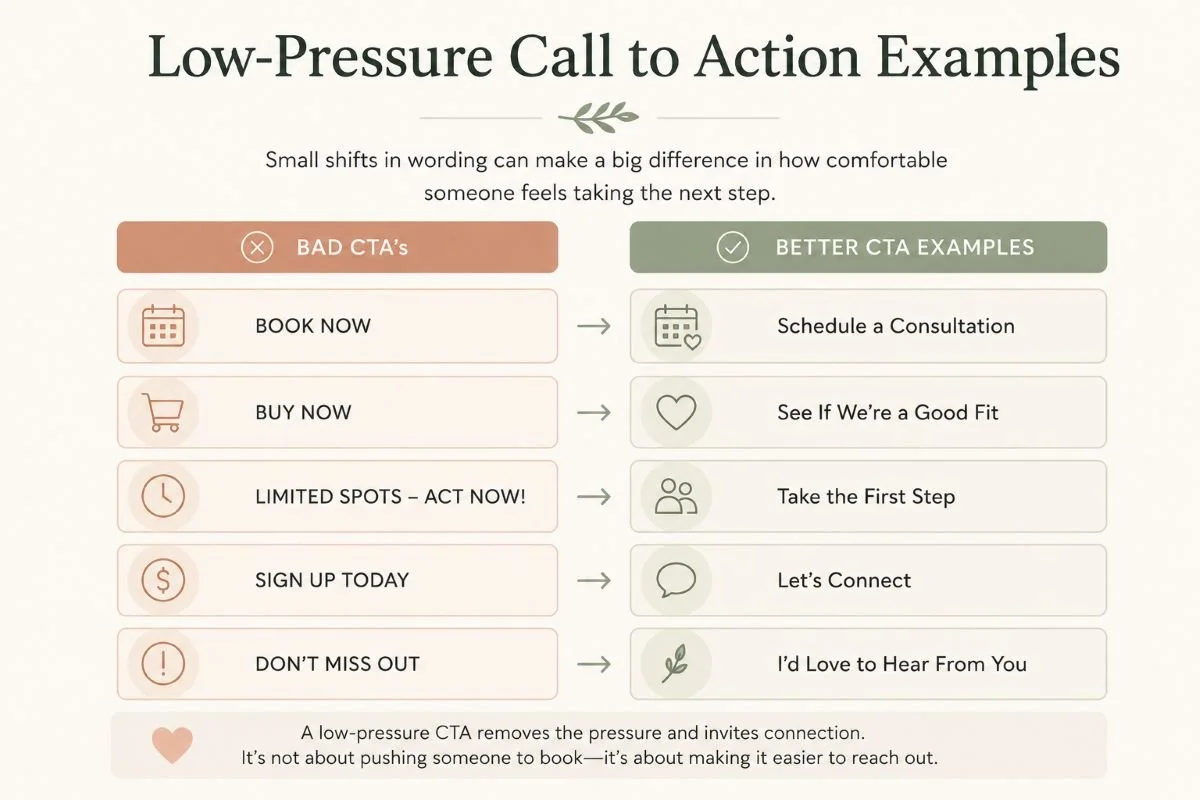

Photo by Kampus Production
Your Website Is Part of the Client Experience
Your website isn't simply a digital brochure sitting somewhere on the internet. For many prospective clients, it's the beginning of their experience with your practice. Every headline, photograph, button, form, and page contributes to the feeling someone has when they visit your therapist website.
Everything—from creating a warm first impression to providing clear messaging, an engaging About page, helpful FAQs, trust-building elements, and thoughtful calls to action—is part of your client's journey. Each element should work together seamlessly to create an experience that feels welcoming, reassuring, and easy to navigate while answering the important questions visitors may have before reaching out.
Remember, your website isn't just a place to share information—it's an opportunity to build trust, reduce uncertainty, and help prospective clients feel confident about taking the next step.

Photo by Merve Arlı
Final Thoughts
If you're a therapist, psychologist, or mental health professional, your website doesn't need to promise that visitors will never feel nervous about reaching out. Instead, it should provide enough clarity, warmth, and reassurance to help make that first step feel possible.
At Nomadic Virtual Solutions, I design thoughtful Squarespace websites for wellness professionals who want their online presence to feel as welcoming, intentional, and professional as the care they provide their clients. If you're ready to create a website that builds trust and helps prospective clients feel comfortable before they ever book, I'd love to hear about your vision and explore how we can work together.