How to Design a Massage Therapy Website That Feels Relaxing, Professional, and Easy to Book
I have a fond memory of planning a spa outing with a college friend near a town where we were both living in New Jersey. I remember the spa website having this consistent nautical blue color that seemed to offer just the right touch of sophistication in strategic places throughout the website. The color palette also incorporated white and gray, which really provided the right amount of brightness and breathing space needed to sort through the many options they had to offer.
The typography was subtle but poised. The copy described what the massages helped with, the offerings, costs, time durations, and how to book. The imagery was enticing enough to make anyone say yes, and the testimonials were promising and helped readers understand what to expect. My friend and I were convinced and looking forward to the experience of being able to let go and relax from the hustle and bustle for a few hours.
Yes, a few hours.
Upon arrival, we learned that this wasn’t just a spa with massages and facials, but it also had pools, saunas, salt rooms with different heat intensities, and a small food court. Talk about an experience!
In retrospect, I would wholeheartedly say that the website did ultimately live up to the spa experience once we arrived, and it even exceeded that with some luxurious surprises along the way. Most importantly, the massage therapy website was able to make both my friend and me feel comfortable, relaxed, safe, and confident before we ever stepped through the doors.
If you’re a massage therapist and you’re still following along, be sure to stay tuned as I highlight 5 things your massage therapist website needs before someone feels ready to book.

Photo by RDNE Stock project
1. Create a Calming First Impression
As a wellness web designer, I thoroughly enjoy scrolling through Pinterest for visual inspiration whenever I find the time. When I add massage therapist pins to my different boards, I’m not always looking for the stereotypical “spa-like” aura that we all know is signature at this point. Instead, I enjoy saving design inspiration that reflects individual practitioners, their brands, and anything that sets them apart.
More specifically, my eye usually gravitates toward massage therapist website pins that represent calming color palettes and aren’t too busy. Next, I also look for typography pairing examples that are easy to read and subtle, with only a touch of script fonts as accents if it seems appropriate to add elegant touches here and there.
I also look for calming photography that can evoke blissful emotions and features models receiving different types of massages that can support various parts of the body. After all, massage therapy clients have different pain points, and they are seeking relief when they decide to book a massage therapist.
White space and overall layouts help tie a massage therapy website together and create first impressions that symbolize cohesion, warmth, and breathability. The lasting impression of your massage therapy website design should ultimately mirror the actual experience clients can expect when they visit you in person.

Photo by Artem Podrez
2. Make Your Massage Services Easy to Understand
As a massage therapist, you’re more than aware that there are some tedious anatomical terms that your ideal client may not always understand, even if they’re important in relation to a particular pain point or the relief they’re seeking. For this reason, it’s important to be specific but also descriptive enough so that website visitors can see themselves and their needs reflected in your services, along with other important details.
Here is what your massage therapy services on your website should clearly communicate:
Types of massage offered
Who each service is for
Session lengths
Pricing, if appropriate
What clients can expect
Any important preparation information
For example:
Instead of simply listing “60-Minute Swedish Massage,” explain who might benefit from it and what kind of experience they can expect.
Try this:
60-Minute Swedish Massage
Looking for a relaxing way to release everyday tension and give yourself some time to slow down? This 60-minute Swedish massage uses gentle-to-moderate pressure and flowing techniques to help you relax, unwind, and reconnect with your body. It’s a great option if you’re new to massage therapy or simply looking for a calming experience that allows you to step away from the demands of your day.
Remember, always write service descriptions in a way that focuses on the client's experience, rather than simply listing technical details. Your massage therapist website should make it easy for potential clients to understand how your services may support their needs and what they can expect when they book.
If you’re struggling to figure out what to actually write for your Services page, The Wellness Website Content Planner can help you organize your services, messaging, FAQs, and other website content before you start designing.

Photo by Mikhail Nilov
3. Make Booking as Easy as Possible
In a world where efficiency is key, it’s always important to keep in mind as a wellness professional that someone can love your website and still leave if the booking process feels complicated.
Here are some helpful tips to make your website booking process more simplified:
Clear “Book Now” buttons
Easy-to-find booking links
Mobile-friendly booking
Avoid unnecessary steps
Clearly explain what happens after someone books
Make sure visitors don't have to hunt for your booking information
CTAs, also known as calls to action, should be placed strategically throughout your website and not just at the bottom of each page. Your wellness web designer can help guide you on the best placements throughout your site while keeping in mind that a consistent customer journey should be supported across all of your website pages.
For example:
Homepage → Book Your Massage
Services → Choose Your Service
About → See Availability
FAQ → Have More Questions? Get in Touch
Looking for a simple way to make online booking easier? A scheduling platform like Cal.com can help you create a streamlined booking experience so potential clients can move from “I'm interested” to “I'm booked” without unnecessary back-and-forth.

Photo by Andrea Piacquadio
4. Help Potential Clients Feel Comfortable Before They Book
Massage can feel personal and vulnerable, particularly for someone visiting a new practitioner. There can also be a broad spectrum of reasons why an ideal client may be interested in online booking for massage therapy, so it’s important to make your website experience as informative and reassuring as possible.
Your massage therapist website can reduce uncertainty by answering questions such as:
What happens during an appointment?
What should I wear?
Do I need to bring anything?
Will I be able to communicate my preferences?
What types of massage do you offer?
What if I've never had a massage before?
Where are you located?
What should I expect when I arrive?
Lastly, you can also help your ideal client feel more secure about booking with you by making sure your About page is fully optimized with relevant information about you, your unique approach, perspective, and experience. Most importantly, always tie that information back to the client and their experience.
Collectively, your potential clients want to know who you are, how you work, and what it might feel like to work with you before they decide to book.
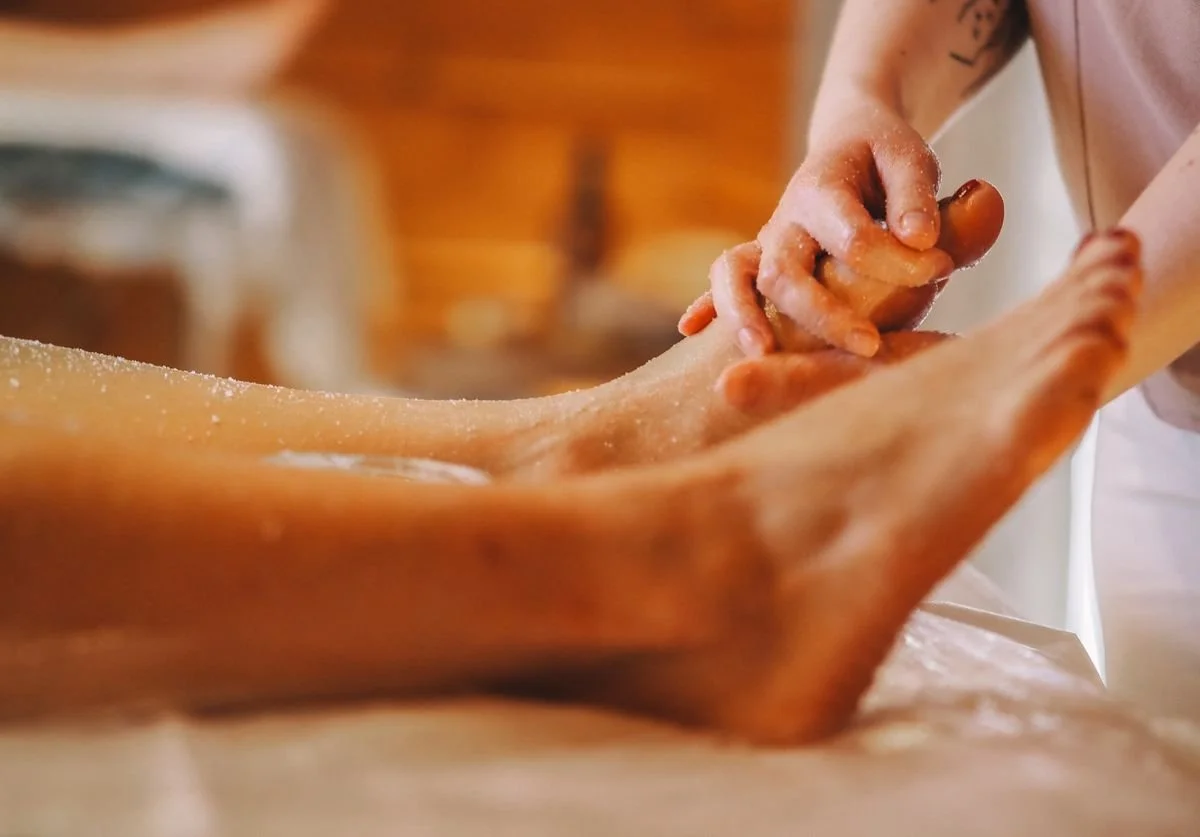
Photo by Alina Zahorulko
5. Use Photography That Supports the Experience
At this point, we’re all very aware of the generic stock images that routinely depict models enjoying back massages (mostly), calming plants, neatly wrapped towels, and massage tools. But there has to be more to this, right?
Your massage therapist website already has a unique approach because it features you. Moreover, professional or polished photos of yourself at work, doing what you do best, are definitely a winner over any basic and repetitive stock image.
Here are some other useful photo tips to keep in mind for your massage therapist website:
Select cohesive images
Show the actual practitioner when possible (candid and posed shots)
Use images of the treatment space
Show details that communicate comfort and professionalism
Make sure images work well on both desktop and mobile
Still not sure how to choose photography for your wellness website? Read my latest blog here, where I go into more detail about How to Choose Stock Photos for Your Wellness Website That Actually Feel Like Your Brand.

Photo by Kanhaiya Sharma
Final Thoughts — Your Website Should Make Booking Feel Like the Natural Next Step
A successful massage therapy website doesn't need to be complicated or packed with endless pages. It needs to make visitors feel comfortable, informed, connected, confident, and ready to book.
Remember that your website should feel like an extension of the experience you provide in person. So, as you’re sketching and gathering content for your massage therapist website, always remember to make sure that your website reflects your massage studio from the seen and felt perspective. And, of course, always tie it back to the customer and their journey.
If you've been thinking about investing in a professional massage therapist website that feels like an authentic extension of your practice, this is exactly the kind of work I love to help wellness professionals with.
Click here if you’d like to book a relaxing and informative chat about your massage therapist website and how I may be able to assist with the creative direction.